Planning
We know that children need to be aware of the purpose of their planning and have the opportunity to review and evaluate it. This cycle of plan, do, review promotes the development and extension of learning.
How we plan
Reception/Year 1
Planned areas of focus and stimulus are introduced each week. Children think and talk about what they are going to plan, often continuing planning from a previous day/time, i.e. a game in the pretend area, a model they want to improve and finish etc.
Time to talk about planning raises the level of learning, which takes place.
Children coming to school with a parent or carer are encouraged to plan with them when they arrive at school in the morning. Older children in school support children arriving on the bus or taxi to complete their planning.
Reception
Children use the computer to complete their planning sheet. They plan up to three things. The reason for this is that no matter how long the session lasts, if an area (eg water-limited to 4 places) is full children have something else planned, so pupil planning always works.
Planning is about children making choices about their learning. We do not expect everyone to plan a particular area in a week because this would restrict children's learning and make child initiated planning meaningless.
Rather we value each individual's interests and support them in developing this, knowing that all six Foundation Stage curriculum areas are planned and delivered by staff in core and foundation subject areas. Planning time focuses on children's personal, social and emotional development.
When a child spends the whole of one or more sessions working on one thing, they show real motivation, concentration and perseverance. Children are given a feeling of time to have quality learning experiences.
Year 1
Year 1 children also use the computer to plan, but their planning is more complex and precise. Children think about what they plan to do, rather than the area they would like to plan in, i.e. I am going to design and make a home for my toy dog, or I am going to play the baby game with Beth and James, I am going to write a letter to ?.. etc. As well as developing and using ICT skills daily in their planning, children select and record the date each day and use a word bank to record their planning. They type their name into the computer, needing to remember to use the shift button to start with a capital letter. Children usually plan one or two things they would like to do each day.
Year 2 and 3
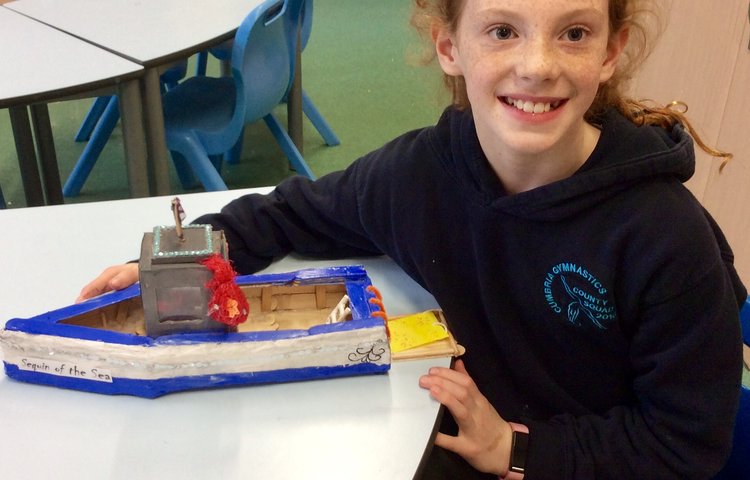
Planning progresses to children thinking about and planning their time for the week ahead. Time is planned on Thursday to discuss and share ideas. Children share plans, asking questions and making suggestions, deciding how they can continue previous planning or start a new project. They record their projects for the half term on a self-designed document, which identifies the project goal, the weekly target, personnel they will work with and resources required. Each week children discuss and monitor progress before setting the new target for that week. Pictorial progress is recorded using the digital camera during weekly review time. Examples include groups of children creating a pop group and performing, planning a wedding, writing movie scripts, carrying out auditions, making scenery and costumes as well as performing to everyone! They have researched and written healthy eating books and an animal magazine! Children have a planning file in which they keep their project plans and photographs. These planning diaries form part of children's personal records of achievement, implementing part of the PSHE framework in that children are developing confidence and responsibility by making the most of their abilities, and developing good relationships. Also child initiated learning provides opportunities for children to develop independence and responsibility and make the most of their own and others abilities.
We strive to raise standards of achievement by children who are more secure, motivated, confident, independent learners. Plan, do, review time helps our children achieve higher levels of this in all aspects of their school life.
Doing
Once children have planned they are encouraged to work independently
(individually or collaboratively depending on what they have planned).
Adults provide support if asked and sensitive intervention if this helps to raise the level of learning, particularly with planned stimulus for younger children. Space is made available for children to store work in progress, including construction equipment.
Reviewing-why review?
Time to review is an essential part of the plan, do, and review process, as planning only works if time is made to review and evaluate learning. Review time takes place as and when possible within the constraints of a very busy curriculum (usually three or four times a week). We always review in mixed age R/Y1/Y2/Y3 groups on a Friday afternoon. Children really value review time and share their own and each other?s problems, solutions and achievements in a positive atmosphere of mutual respect.
Creativity and individuality are celebrated, and often one child talking about what they have been doing can interest and encourage other children to become involved in activities they may not have thought of.
It is a time to celebrate success, reflect on what they have done/are doing and to think about what they will plan next!
How we review
We review as often as possible. On Friday afternoons review time is organised so that all available adults can take a mixed Reception/Year 1/ 2/3 group for review. We ensure that children working collaboratively are in the same review group. Every child has the opportunity to share, show and talk about what they have been doing.
Children listen to each other and respond positively to other people's learning. They are encouraged to ask questions, make suggestions, which support and develop, and celebrate success/achievements. Confidence and self-esteem are raised during this valuable time. Children help each other to improve and extend their learning, raising the quality and standards of learning and achievement. Photographs of achievements are taken and inserted into planning files.
Pupil progress in independent learning is observed and discussed during staff meetings. Assessments for Foundation Stage personal, social and emotional development and PSHE are shared and moderated. All children have individual records and targets in this area, which are reviewed and updated on a termly basis.
Staff review time!
As a staff we are continually seeking new research/ articles on creativity and how children learn. We review and improve our provision through evaluation of how we organise the learning environment, plan for and facilitate children's learning. We are also involved in a creative learning process.
Autumn 2002 Primary Leadership Paper No.7 Creativity states that: -
"Effective learning involves:
- Children having time to explore and experiment with ideas, materials and activities
- Children feel secure to try new experiences and ways of doing things
- Children learn through all their senses
In this area of learning, effective teaching requires:
- Practitioners who give children opportunities to develop their own ideas
- Valuing children's own ideas and not expecting them to reproduce someone else's dance, model or picture
- Practitioners who plan experiences, opportunities and the environment to support children's ability to discover, explore and express their creativity
- Practitioners who interact with and support children in developing confidence, independence in making choices."
The National Advisory Committee on Creative and Cultural Education (NACCCE) stated in it's report All Our Futures: Creativity, Culture & Education (2000) that:
"The personal challenge is to develop the unique capacities of all young people and to provide a basis on which they can build lives that are personal and fulfilling."
Excellence and Enjoyment A Strategy for Primary Schools-DfES 2003
"Every teacher knows that truly effective learning and teaching focuses on individual children, their strengths, their needs, and the approaches which engage, motivate and inspire them."
We regularly review and work to improve our planning and provision to foster our children's individual, creative and personal development.